Buy dastan.eu ?
We are moving the project
dastan.eu .
Are you interested in purchasing the domain
dastan.eu ?
domain@kv-gmbh.de · 0541-91531010
Buy dastan.eu ?
What is an allegory?
An allegory is a literary device in which characters, events, and settings represent abstract ideas or moral qualities. It is a symbolic narrative that can be interpreted to reveal a hidden meaning or message. Allegories are often used to convey complex ideas or moral lessons in a more engaging and accessible way. **
What is Plato's Allegory of the Cave?
Plato's Allegory of the Cave is a philosophical metaphor used in his work "The Republic." In the allegory, Plato describes a group of people who have been imprisoned in a cave since birth, facing a wall where shadows are projected from a fire behind them. The prisoners believe these shadows to be the only reality they know. When one prisoner is freed and sees the outside world, he realizes the true nature of reality and the limitations of his previous understanding. The allegory is often interpreted as a representation of the journey from ignorance to enlightenment, highlighting the importance of critical thinking and questioning one's beliefs. **


Similar search terms for Allegory
Top-Angebote
Products related to Allegory:
-
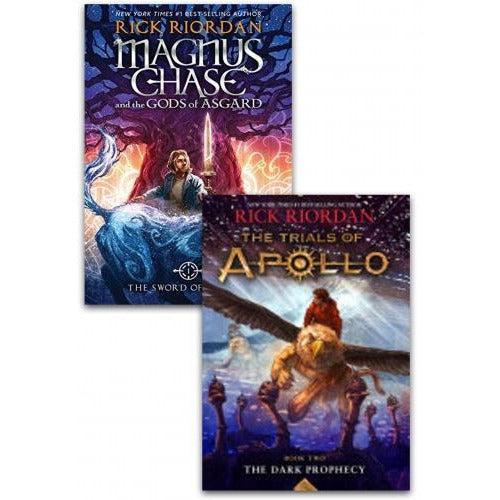
Disney Magnus Chase & Trials of Apollo 2 Book Set by Rick Riordan – Mythology Adventure CollectionRick Riordon Deluxe 2 Books Collection Set Description Magnus Chase And The Gods Of Asgard Magnus Chase has always been a troubled kid. Since his mother's mysterious death; he's lived alone on the streets of Boston; surviving by his wits; keeping one step ahead of the police and the truant officers. One day; he's tracked down by an uncle he barely knows-a man his mother claimed was dangerous. Uncle Randolph tells him an impossible secret: Magnus is the son of a Norse god The Viking myths are true. The gods of Asgard are preparing for war. Trolls; giants and worse monsters are stirring for doomsday. To prevent Ragnarok; Magnus must search the Nine Worlds for a weapon that has been lost for thousands of years. When an attack by fire giants forces him to choose between his own safety and the lives of hundreds of innocents; Magnus makes a fatal decision. Sometimes; the only way to start a new life is to die The Trials Of Apollo (Book Two) The Dark Prophecy The second title in Rick Riordan's Trials of Apollo series - set in the action-packed world of Percy Jackson. The god Apollo; cast down to earth and trapped in the form of a gawky teenage boy as punishment; must set off on the second of his harrowing (and hilarious) trials. He and his companions seek the ancient oracles - restoring them is the only way for Apollo to reclaim his place on Mount Olympus - but this is easier said than done. Somewhere in the American Midwest is a haunted cave that may hold answers for Apollo in his quest to become a god again . . . if it doesn't kill him or drive him insane first. Standing in Apollo's way is the second member of the evil Triumvirate a Roman emperor whose love of bloodshed and spectacle makes even Nero look tame. To survive the encounter; Apollo will need the help of a now-mortal goddess; a bronze dragon; and some familiar demigod faces from Camp Half-Blood. With them by his side; can Apollo face down the greatest challenge of his four thousand years of existence4,50 £*Shipping: 1,99 £Secure redirect to the provider
-
Puffin/Penguin Ltd Trials of Apollo & Magnus Chase 9 Book Set by Rick Riordan – Mythology Adventure CollectionThe Hidden Oracle How do you punish an immortal? By making him human.After angering his father Zeus, the god Apollo is cast down from Olympus. Weak and disoriented, he lands in New York City as a regular teenage boy. Now, without his godly powers, the four-thousand-year-old deity must learn to survive in the modern world until he can somehow find a way to regain Zeus favour. But Apollo has many enemies-gods, monsters, and mortals who would love to see the former Olympian permanently destroyed. Apollo needs help, and he can think of only one place to go . . . an enclave of modern demigods known as Camp Half-Blood. The Dark Prophecy The second title in Rick Riordans Trials of Apollo series - set in the action-packed world of Percy Jackson. The god Apollo, cast down to earth and trapped in the form of a gawky teenage boy as punishment, must set off on the second of his harrowing (and hilarious) trials. He and his companions seek the ancient oracles - restoring them is the only way for Apollo to reclaim his place on Mount Olympus - but this is easier said than done. Somewhere in the American Midwest is a haunted cave that may hold answers for Apollo in his quest to become a god again . . . if it does not kill him or drive him insane first. Standing in Apollos way is the second member of the evil Triumvirate - a Roman emperor whose love of bloodshed and spectacle makes even Nero look tame. To survive the encounter, Apollo will need the help of a now-mortal goddess, a bronze dragon, and some familiar demigod faces from Camp Half-Blood. With them by his side, can Apollo face down the greatest challenge of his four thousand years of existence? The Burning Maze I WAS A GOD, ONCE. UNTIL I WAS CAST OUT BY MY FATHER, ZEUS. NOW I'M AN AWKWARD MORTAL TEENAGER CALLED LESTER. My way out? A series of scary and dangerous trials, of course. For my third mission, I must: Journey through the Labyrinth to free an Oracle who only speaks in puzzles.Defeat a vicious and bloodthirsty Roman Emperor - the most vicious of three very vicious and bloodthirsty Roman Emperors. Is that all? No, I've to do everything without any of my godly powers. Wonderful. Looks like I'll be needing all the help I can get. From new friends, and old . . The Tyrants Tomb You will get to the Tiber alive. You will start to Jive. I am ApolloI will rememberThe former God Apollo, cast out by his father, Zeus, is having a pretty rough time of it. Well, for one thing, he's called Lester. But being an awkward mortal teenager is the least of his worries. Though he and his friends (some of them) have emerged from the Burning Maze, rescued the Oracle and lived to fight another day, they can't escape the tragedy that has befallen them, or the terrible trials still to face. So, with heavy heart, Apollo (OK, Lester) and Meg have a triumvirate still to defeat, oracles to rescue, and prophecies to decipher, so that the world may be saved, and Lester may ascend into the heavens to become Apollo once...32,95 £*Shipping: 2,99 £Secure redirect to the provider
-
Walker Books Loki A Bad God's Guide 5 Books Collection Set – Funny Mythology Adventure Collection for KidsA Bad God's Guide to Ruling the World Loki A Bad God's Guide Series Collection 5 Book Set: A Bad God's Guide To Taking The Blame Odin has given Loki another chance to prove himself worthy of Asgard. But earning everyone's trust is tricky, and when Thor's hammer goes missing, everyone blames Loki! Outrageous!To clear his name he must: 1) Find Thor's beloved hammer 2) Uncover the real thief 3) Force everyone to admit they were wrong An easy feat for someone as handsome and clever as Loki... A Bad God's Guide To Being Good Wry, witty and very funny diary-style story packed with doodles and comic strips about the frustration trickster god Loki feels at having to live trapped in the body of a weedy eleven-year-old boy. After one trick too many, Loki is banished to live on Earth as a "normal" school boy. Forbidden from using his AWESOME godly powers, Loki must show moral improvement. As he records his lies THE TRUTH in his magical (judgemental) diary, it becomes clear Loki hasn't a clue how to tell good from evil, trust from tricks, or friends from enemies. A Bad God's Guide to Ruling the World When Heimdall and Hyrrokkin abandon their "children" to go on holiday, Odin sends Baldur – Thor's half brother and god of making Loki look bad – to babysit. As Baldur and Thor bond, Loki's attempts to prove he's good start getting a bit desperate. After the drama teacher casts him as the villain in the school play, Loki starts to wonder whether there's any point in being good when everyone seems convinced of his villainy. That is until he discovers a rather unusual ring among the costumes and props. A ring that looks suspiciously like the cursed ring of Andvari, one that promises Loki the world if only he gives in to his deepest, darkest desires... Loki: A Bad God's Guide to Making Enemies Loki has made a fair few enemies during his time in Asgard. Too many to count and certainly too many to remember. When the elf, Vinir beams Loki aboard his chariot and challenges him to a magical duel, Loki hasn't got a clue why. Sweet talking his way out of a fight by pointing out there's little honour in duelling someone who can't remember how they wronged you, and even less in picking on a child, Loki is returned safely to school. Loki: A Bad God's Guide to Causing Chaos Loki, the mighty trickster god, has been banished by Odin to live on Earth as an eleven-year-old boy. When Freyja, the god of love and war pays a visit, friends turn to enemies and enemies to friends, turning Loki's life upside down. Usually it's him causing the chaos, but this time, it's up to Loki to stop it.21,99 £*Shipping: 2,99 £Secure redirect to the provider
-
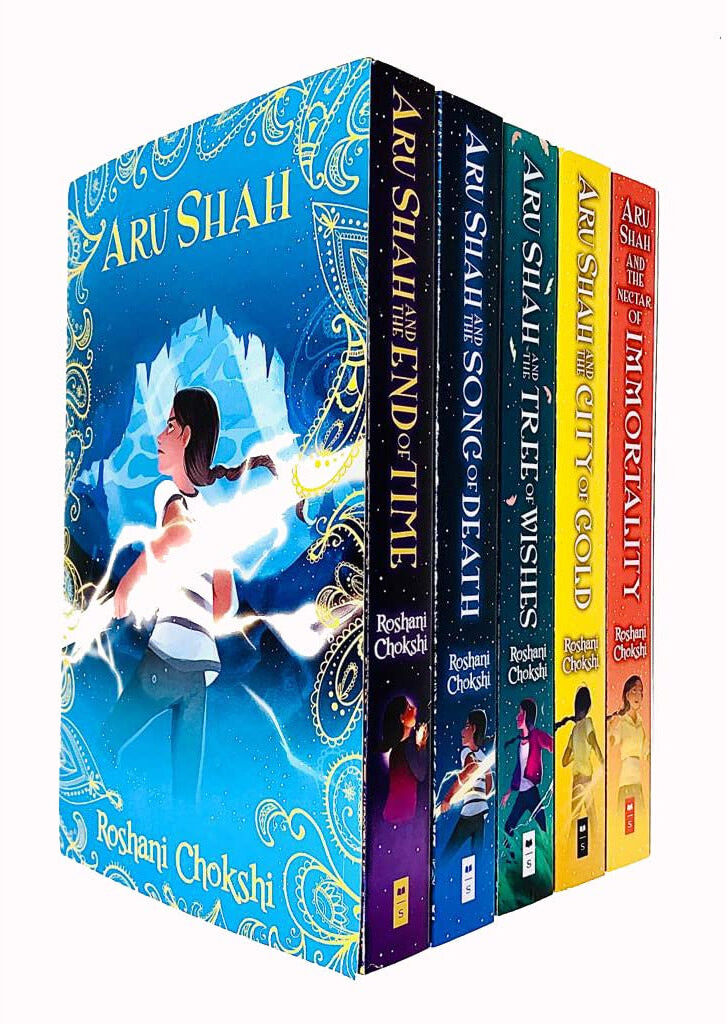
Scholastic Aru Shah Series Books 1–5 Set by Roshani Chokshi – Complete Pandava Quintet Mythology Adventure CollectionAru Shah Series Books 1 - 5 Collection by Roshani Chokshi: Aru Shah and the End of Time: Twelve-year-old Aru Shah has a tendency to stretch the truth in order to fit in at school. Whilst her classmates are jetting off to exotic locales, she'll be at home, in the Museum of Ancient Indian Art and Culture where her mother works. Is it any wonder that Aru makes up stories about being royalty. Aru Shah and the Song of Death: The god of love's bow and arrow have gone missing, and the thief isn't playing Cupid. Instead, they're turning people into heartless fighting-machine zombies. If that weren't bad enough, somehow Aru gets framed as the thief. If she doesn't find the arrow by the next full moon, she'll be kicked out of the Otherworld. Aru Shah and the Tree of Wishes: War between the devas and the demons is imminent, and the Otherworld is on high alert. Aru Shah and her friends are sent on a mission to rescue two targets, one of whom is about to utter a prophecy that cannot reach the ears of villainous the Sleeper. Aru Shah and the City of Gold: Aru has just made a wish on the tree of wishes, but she can't remember what it was. She's pretty sure she didn't wish for a new sister, one who looks strangely familiar and claims to be the Sleeper's daughter, like her. Aru's biggest question, though, is why every adult she has loved and trusted so far has failed her. Aru Shah and the Nectar of Immortality: Aru only has until the next full moon to stop the Sleeper from gaining access to the nectar of immortality, which will grant him infinite power. Her quest will have the Pandavas calling on old friends, meeting new allies, and facing fearsome trials, like...performing in a rock concert?13,99 £*Shipping: 2,99 £Secure redirect to the provider


-
Is there an English allegory for this?
Yes, there is an English allegory that is similar to the story of the Chinese farmer. One example is the tale of "The Tortoise and the Hare" from Aesop's Fables. In this story, the slow and steady tortoise ultimately wins the race against the fast but overconfident hare, teaching a lesson about perseverance and humility. Both stories emphasize the importance of patience, resilience, and the unpredictable nature of life. **
-
What is the Allegory of the Cave?
The Allegory of the Cave is a philosophical concept presented by the ancient Greek philosopher Plato in his work "The Republic." In this allegory, Plato describes a group of people who have been imprisoned in a cave since birth, facing a wall where shadows are projected from objects behind them. The prisoners mistake these shadows for reality, until one of them is freed and sees the outside world. This allegory symbolizes the journey from ignorance to knowledge, highlighting the importance of critical thinking, questioning assumptions, and seeking truth beyond what is immediately apparent. **
-
What is the difference between allegory and metaphor?
Allegory and metaphor are both literary devices used to convey deeper meanings in a text, but they differ in their scope and function. A metaphor is a direct comparison between two unlike things, often used to create vivid imagery or emphasize a particular quality. On the other hand, an allegory is a more extended metaphor in which characters, events, and settings represent abstract ideas or moral qualities. While a metaphor is a single comparison, an allegory is a complete narrative that can be interpreted on multiple levels. **
-
Is Plato's Allegory of the Cave inappropriate here?
No, Plato's Allegory of the Cave is not inappropriate here. The allegory can be a useful tool to help explain the concept of perception, reality, and enlightenment. By using the allegory, we can explore how our perceptions may be limited and how gaining new knowledge can lead to a deeper understanding of the world around us. It can be a thought-provoking way to encourage critical thinking and reflection on our own beliefs and perspectives. **
What is the Allegory of the Cave 2?
The Allegory of the Cave 2 is a modern interpretation of the original Allegory of the Cave by Plato. It explores the concept of reality and perception in the context of modern society. In this allegory, individuals are depicted as being trapped in a cave, only able to see shadows on the wall, which they mistake for reality. The allegory serves as a metaphor for the way people are often limited by their own perspectives and beliefs, and how they may be resistant to accepting new ideas or truths. **
What is the difference between allegory and symbol?
Allegory and symbol are both literary devices used to convey deeper meanings in a text. However, the main difference between the two is that an allegory is a complete narrative that represents abstract ideas or moral qualities, while a symbol is a specific object, person, or event that represents something else. In other words, an allegory is a story with a hidden meaning, while a symbol is a single element that carries a deeper significance. Additionally, allegories often have a more complex and extended representation of abstract concepts, while symbols are more direct and specific in their representation. **
Top-Angebote
Products related to Allegory:
-
Sun Zero Allegory Abstract Blackout Grommet Curtain Panel, Single PanelFeatures: Abstract printed paint strokes make the perfect conversation piece Blackout technology blocks out most unwanted light while enhancing privacy Energy efficient design reduces energy lost through your windows by up to 25% Thermal properties...22,25 $*Shipping: 0,00 $Secure redirect to the provider
-
Arcturus Classic Tales Of Detection And AdventureContaining one of the best known and best loved detective novels of all time - The Murders in the Rue Morgue - this entertaining collection of Poe's work shows why he was considered a master of mystery. Also included in the book is The Mystery of Marie Rogêt, which was a sequel to the thrilling Murders in the Rue Morgue, as well as three other tales of detection and adventure, including "Thou Art the Man!", "The Purloined Letter" and "The Unparelleled Adventure of One Hans Pfaall". Such was the influence of these works that the Mystery Writers of America named their awards after Poe and called them the Edgars.4,99 £*Shipping: 1,99 £Secure redirect to the provider
-
Disney Magnus Chase & Trials of Apollo 2 Book Set by Rick Riordan – Mythology Adventure CollectionRick Riordon Deluxe 2 Books Collection Set Description Magnus Chase And The Gods Of Asgard Magnus Chase has always been a troubled kid. Since his mother's mysterious death; he's lived alone on the streets of Boston; surviving by his wits; keeping one step ahead of the police and the truant officers. One day; he's tracked down by an uncle he barely knows-a man his mother claimed was dangerous. Uncle Randolph tells him an impossible secret: Magnus is the son of a Norse god The Viking myths are true. The gods of Asgard are preparing for war. Trolls; giants and worse monsters are stirring for doomsday. To prevent Ragnarok; Magnus must search the Nine Worlds for a weapon that has been lost for thousands of years. When an attack by fire giants forces him to choose between his own safety and the lives of hundreds of innocents; Magnus makes a fatal decision. Sometimes; the only way to start a new life is to die The Trials Of Apollo (Book Two) The Dark Prophecy The second title in Rick Riordan's Trials of Apollo series - set in the action-packed world of Percy Jackson. The god Apollo; cast down to earth and trapped in the form of a gawky teenage boy as punishment; must set off on the second of his harrowing (and hilarious) trials. He and his companions seek the ancient oracles - restoring them is the only way for Apollo to reclaim his place on Mount Olympus - but this is easier said than done. Somewhere in the American Midwest is a haunted cave that may hold answers for Apollo in his quest to become a god again . . . if it doesn't kill him or drive him insane first. Standing in Apollo's way is the second member of the evil Triumvirate a Roman emperor whose love of bloodshed and spectacle makes even Nero look tame. To survive the encounter; Apollo will need the help of a now-mortal goddess; a bronze dragon; and some familiar demigod faces from Camp Half-Blood. With them by his side; can Apollo face down the greatest challenge of his four thousand years of existence4,50 £*Shipping: 1,99 £Secure redirect to the provider
-
Puffin/Penguin Ltd Trials of Apollo & Magnus Chase 9 Book Set by Rick Riordan – Mythology Adventure CollectionThe Hidden Oracle How do you punish an immortal? By making him human.After angering his father Zeus, the god Apollo is cast down from Olympus. Weak and disoriented, he lands in New York City as a regular teenage boy. Now, without his godly powers, the four-thousand-year-old deity must learn to survive in the modern world until he can somehow find a way to regain Zeus favour. But Apollo has many enemies-gods, monsters, and mortals who would love to see the former Olympian permanently destroyed. Apollo needs help, and he can think of only one place to go . . . an enclave of modern demigods known as Camp Half-Blood. The Dark Prophecy The second title in Rick Riordans Trials of Apollo series - set in the action-packed world of Percy Jackson. The god Apollo, cast down to earth and trapped in the form of a gawky teenage boy as punishment, must set off on the second of his harrowing (and hilarious) trials. He and his companions seek the ancient oracles - restoring them is the only way for Apollo to reclaim his place on Mount Olympus - but this is easier said than done. Somewhere in the American Midwest is a haunted cave that may hold answers for Apollo in his quest to become a god again . . . if it does not kill him or drive him insane first. Standing in Apollos way is the second member of the evil Triumvirate - a Roman emperor whose love of bloodshed and spectacle makes even Nero look tame. To survive the encounter, Apollo will need the help of a now-mortal goddess, a bronze dragon, and some familiar demigod faces from Camp Half-Blood. With them by his side, can Apollo face down the greatest challenge of his four thousand years of existence? The Burning Maze I WAS A GOD, ONCE. UNTIL I WAS CAST OUT BY MY FATHER, ZEUS. NOW I'M AN AWKWARD MORTAL TEENAGER CALLED LESTER. My way out? A series of scary and dangerous trials, of course. For my third mission, I must: Journey through the Labyrinth to free an Oracle who only speaks in puzzles.Defeat a vicious and bloodthirsty Roman Emperor - the most vicious of three very vicious and bloodthirsty Roman Emperors. Is that all? No, I've to do everything without any of my godly powers. Wonderful. Looks like I'll be needing all the help I can get. From new friends, and old . . The Tyrants Tomb You will get to the Tiber alive. You will start to Jive. I am ApolloI will rememberThe former God Apollo, cast out by his father, Zeus, is having a pretty rough time of it. Well, for one thing, he's called Lester. But being an awkward mortal teenager is the least of his worries. Though he and his friends (some of them) have emerged from the Burning Maze, rescued the Oracle and lived to fight another day, they can't escape the tragedy that has befallen them, or the terrible trials still to face. So, with heavy heart, Apollo (OK, Lester) and Meg have a triumvirate still to defeat, oracles to rescue, and prophecies to decipher, so that the world may be saved, and Lester may ascend into the heavens to become Apollo once...32,95 £*Shipping: 2,99 £Secure redirect to the provider
-
What is an allegory?
An allegory is a literary device in which characters, events, and settings represent abstract ideas or moral qualities. It is a symbolic narrative that can be interpreted to reveal a hidden meaning or message. Allegories are often used to convey complex ideas or moral lessons in a more engaging and accessible way. **
-
What is Plato's Allegory of the Cave?
Plato's Allegory of the Cave is a philosophical metaphor used in his work "The Republic." In the allegory, Plato describes a group of people who have been imprisoned in a cave since birth, facing a wall where shadows are projected from a fire behind them. The prisoners believe these shadows to be the only reality they know. When one prisoner is freed and sees the outside world, he realizes the true nature of reality and the limitations of his previous understanding. The allegory is often interpreted as a representation of the journey from ignorance to enlightenment, highlighting the importance of critical thinking and questioning one's beliefs. **
-
Is there an English allegory for this?
Yes, there is an English allegory that is similar to the story of the Chinese farmer. One example is the tale of "The Tortoise and the Hare" from Aesop's Fables. In this story, the slow and steady tortoise ultimately wins the race against the fast but overconfident hare, teaching a lesson about perseverance and humility. Both stories emphasize the importance of patience, resilience, and the unpredictable nature of life. **
-
What is the Allegory of the Cave?
The Allegory of the Cave is a philosophical concept presented by the ancient Greek philosopher Plato in his work "The Republic." In this allegory, Plato describes a group of people who have been imprisoned in a cave since birth, facing a wall where shadows are projected from objects behind them. The prisoners mistake these shadows for reality, until one of them is freed and sees the outside world. This allegory symbolizes the journey from ignorance to knowledge, highlighting the importance of critical thinking, questioning assumptions, and seeking truth beyond what is immediately apparent. **
Similar search terms for Allegory
-
Walker Books Loki A Bad God's Guide 5 Books Collection Set – Funny Mythology Adventure Collection for KidsA Bad God's Guide to Ruling the World Loki A Bad God's Guide Series Collection 5 Book Set: A Bad God's Guide To Taking The Blame Odin has given Loki another chance to prove himself worthy of Asgard. But earning everyone's trust is tricky, and when Thor's hammer goes missing, everyone blames Loki! Outrageous!To clear his name he must: 1) Find Thor's beloved hammer 2) Uncover the real thief 3) Force everyone to admit they were wrong An easy feat for someone as handsome and clever as Loki... A Bad God's Guide To Being Good Wry, witty and very funny diary-style story packed with doodles and comic strips about the frustration trickster god Loki feels at having to live trapped in the body of a weedy eleven-year-old boy. After one trick too many, Loki is banished to live on Earth as a "normal" school boy. Forbidden from using his AWESOME godly powers, Loki must show moral improvement. As he records his lies THE TRUTH in his magical (judgemental) diary, it becomes clear Loki hasn't a clue how to tell good from evil, trust from tricks, or friends from enemies. A Bad God's Guide to Ruling the World When Heimdall and Hyrrokkin abandon their "children" to go on holiday, Odin sends Baldur – Thor's half brother and god of making Loki look bad – to babysit. As Baldur and Thor bond, Loki's attempts to prove he's good start getting a bit desperate. After the drama teacher casts him as the villain in the school play, Loki starts to wonder whether there's any point in being good when everyone seems convinced of his villainy. That is until he discovers a rather unusual ring among the costumes and props. A ring that looks suspiciously like the cursed ring of Andvari, one that promises Loki the world if only he gives in to his deepest, darkest desires... Loki: A Bad God's Guide to Making Enemies Loki has made a fair few enemies during his time in Asgard. Too many to count and certainly too many to remember. When the elf, Vinir beams Loki aboard his chariot and challenges him to a magical duel, Loki hasn't got a clue why. Sweet talking his way out of a fight by pointing out there's little honour in duelling someone who can't remember how they wronged you, and even less in picking on a child, Loki is returned safely to school. Loki: A Bad God's Guide to Causing Chaos Loki, the mighty trickster god, has been banished by Odin to live on Earth as an eleven-year-old boy. When Freyja, the god of love and war pays a visit, friends turn to enemies and enemies to friends, turning Loki's life upside down. Usually it's him causing the chaos, but this time, it's up to Loki to stop it.21,99 £*Shipping: 2,99 £Secure redirect to the provider
-
Scholastic Aru Shah Series Books 1–5 Set by Roshani Chokshi – Complete Pandava Quintet Mythology Adventure CollectionAru Shah Series Books 1 - 5 Collection by Roshani Chokshi: Aru Shah and the End of Time: Twelve-year-old Aru Shah has a tendency to stretch the truth in order to fit in at school. Whilst her classmates are jetting off to exotic locales, she'll be at home, in the Museum of Ancient Indian Art and Culture where her mother works. Is it any wonder that Aru makes up stories about being royalty. Aru Shah and the Song of Death: The god of love's bow and arrow have gone missing, and the thief isn't playing Cupid. Instead, they're turning people into heartless fighting-machine zombies. If that weren't bad enough, somehow Aru gets framed as the thief. If she doesn't find the arrow by the next full moon, she'll be kicked out of the Otherworld. Aru Shah and the Tree of Wishes: War between the devas and the demons is imminent, and the Otherworld is on high alert. Aru Shah and her friends are sent on a mission to rescue two targets, one of whom is about to utter a prophecy that cannot reach the ears of villainous the Sleeper. Aru Shah and the City of Gold: Aru has just made a wish on the tree of wishes, but she can't remember what it was. She's pretty sure she didn't wish for a new sister, one who looks strangely familiar and claims to be the Sleeper's daughter, like her. Aru's biggest question, though, is why every adult she has loved and trusted so far has failed her. Aru Shah and the Nectar of Immortality: Aru only has until the next full moon to stop the Sleeper from gaining access to the nectar of immortality, which will grant him infinite power. Her quest will have the Pandavas calling on old friends, meeting new allies, and facing fearsome trials, like...performing in a rock concert?13,99 £*Shipping: 2,99 £Secure redirect to the provider
-
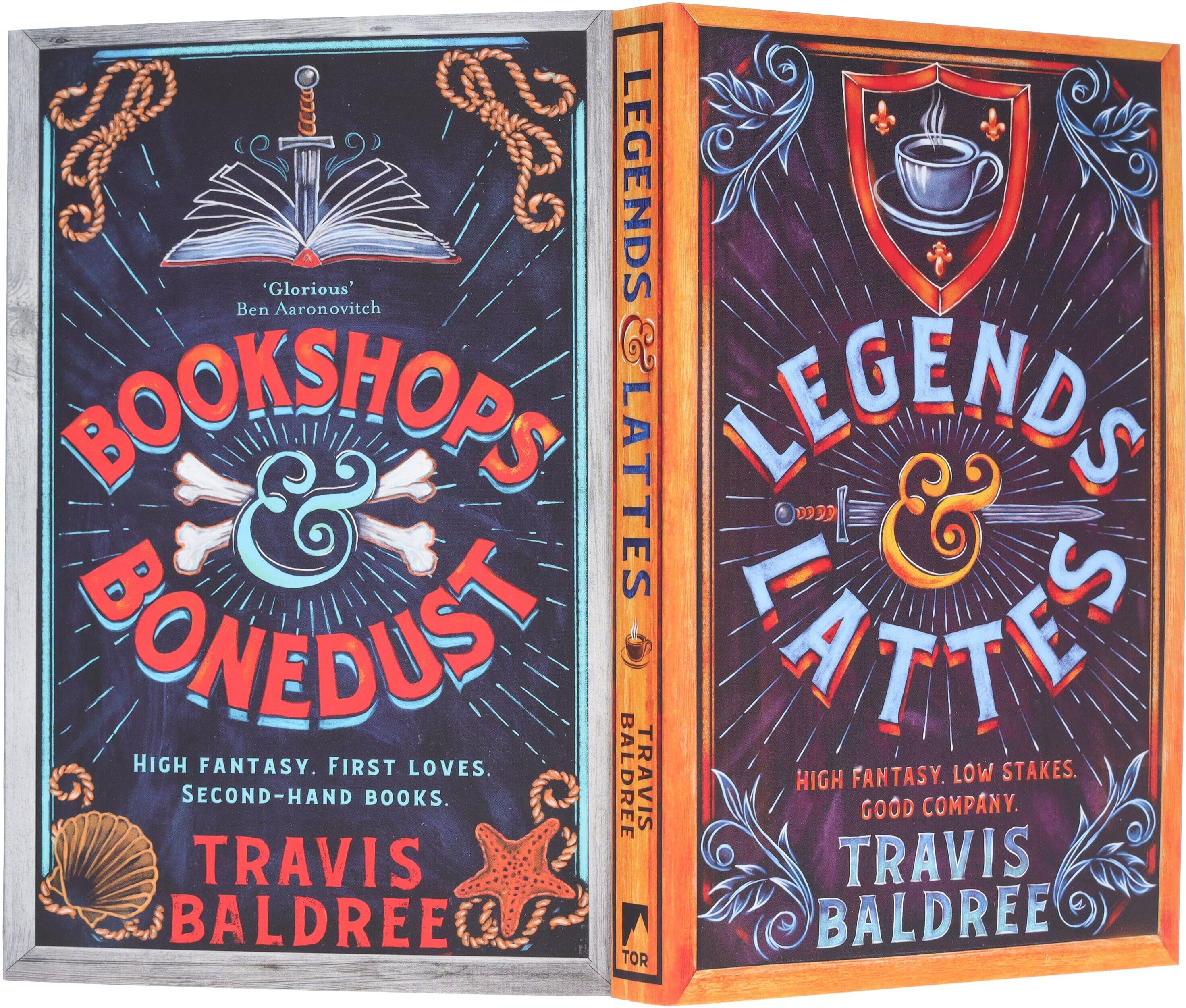
Legends & Lattes Series by Travis Baldree 2 Books Collection Set - Fiction - Paperback MacmillanTitles in this Set: 1. Legends & Lattes 2. Bookshops & Bonedust Description: Legends & Lattes High fantasy, low stakes – with a double-shot of coffee. After decades of adventuring, Viv the orc barbarian is finally hanging up her sword for good. Now she sets her sights on a new dream – for she plans to open the first coffee shop in the city of Thune. Even though no one there knows what coffee actually is. If Viv wants to put the past behind her, she can’t go it alone. And help might arrive from unexpected quarters. Yet old rivals and new stand in the way of success. And Thune’s shady underbelly could make it all too easy for Viv to take up the blade once more. But the true reward of the uncharted path is the travellers you meet along the way. Whether bound by ancient magic, delicious pastries or a freshly brewed cup, they may become something deeper than Viv ever could have imagined . . . Bookshops & Bonedust Viv’s career with the renowned mercenary company Rackam’s Ravens isn’t going as planned. Wounded during the hunt for a powerful necromancer, she’s packed off against her will to recuperate in the sleepy beach town of Murk – so far from the action that she worries she’ll never be able to return to it. What’s a thwarted soldier of fortune to do? Spending her hours at a struggling bookshop in the company of its foul-mouthed proprietor is the last thing Viv would have predicted. Even though it may be exactly what she needs. Still, adventure isn’t far away. A suspicious traveller in grey, a gnome with a chip on her shoulder, a summer fling and an improbable number of skeletons prove Murk to be more eventful than Viv could have ever expected. Sometimes, right things happen at the wrong time. Sometimes, what we need isn’t what we seek. And sometimes, we find ourselves in the stories we experience together . . .17,99 £*Shipping: 2,99 £Secure redirect to the provider
-
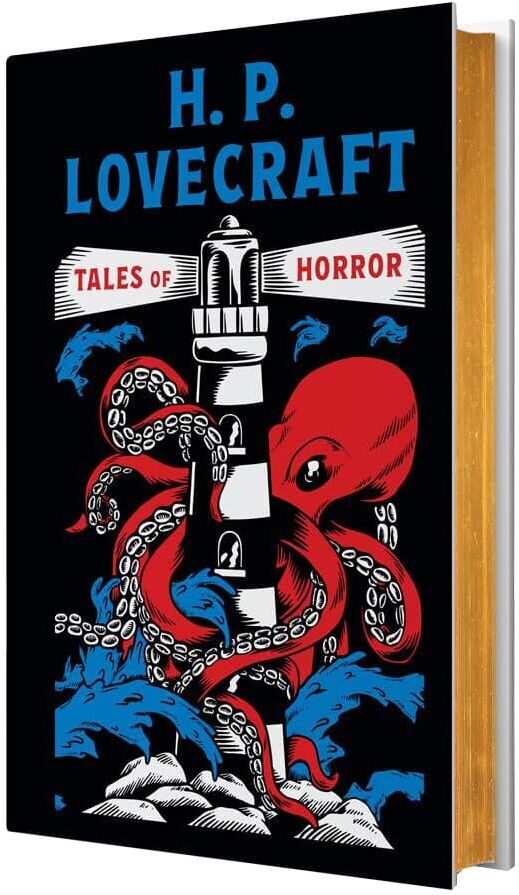
Tales of Horror By H. P. Lovecraft - Fiction - Leather Bound Wilco Books“The most merciful thing in the world, I think, is the inability of the human mind to correlate all its contents. We live on a placid island of ignorance in the midst of black seas of the infinity, and it was not meant that we should voyage far.” This collection includes: Macabre Stories The Call of Cthulhu and Other Stories The Dunwich Horror and Other Stories At the Mountains of Madness and Other Stories Stories of the Dreamlands The Randolph Carter Tales Howard Phillips Lovecraft, also known as H. P. Lovecraft, was a well-known American author who wrote science, fantasy and horror fiction. One of his most popular creations is the myth of Cthulhu. Although he struggled financially as a writer, his works regained popularity in the latter half of the 20th century. As a result, he became known as the master of Gothic horror.11,99 £*Shipping: 2,99 £Secure redirect to the provider
-
What is the difference between allegory and metaphor?
Allegory and metaphor are both literary devices used to convey deeper meanings in a text, but they differ in their scope and function. A metaphor is a direct comparison between two unlike things, often used to create vivid imagery or emphasize a particular quality. On the other hand, an allegory is a more extended metaphor in which characters, events, and settings represent abstract ideas or moral qualities. While a metaphor is a single comparison, an allegory is a complete narrative that can be interpreted on multiple levels. **
-
Is Plato's Allegory of the Cave inappropriate here?
No, Plato's Allegory of the Cave is not inappropriate here. The allegory can be a useful tool to help explain the concept of perception, reality, and enlightenment. By using the allegory, we can explore how our perceptions may be limited and how gaining new knowledge can lead to a deeper understanding of the world around us. It can be a thought-provoking way to encourage critical thinking and reflection on our own beliefs and perspectives. **
-
What is the Allegory of the Cave 2?
The Allegory of the Cave 2 is a modern interpretation of the original Allegory of the Cave by Plato. It explores the concept of reality and perception in the context of modern society. In this allegory, individuals are depicted as being trapped in a cave, only able to see shadows on the wall, which they mistake for reality. The allegory serves as a metaphor for the way people are often limited by their own perspectives and beliefs, and how they may be resistant to accepting new ideas or truths. **
-
What is the difference between allegory and symbol?
Allegory and symbol are both literary devices used to convey deeper meanings in a text. However, the main difference between the two is that an allegory is a complete narrative that represents abstract ideas or moral qualities, while a symbol is a specific object, person, or event that represents something else. In other words, an allegory is a story with a hidden meaning, while a symbol is a single element that carries a deeper significance. Additionally, allegories often have a more complex and extended representation of abstract concepts, while symbols are more direct and specific in their representation. **
* All prices are inclusive of VAT and, if applicable, plus shipping costs. The offer information is based on the details provided by the respective shop and is updated through automated processes. Real-time updates do not occur, so deviations can occur in individual cases. ** Note: Parts of this content were created by AI.